Skip to content


Table of Contents
Redness, burning, stinging, and irritation after applying skincare products can easily lead someone to assume they simply have sensitive skin. However, these symptoms can also be signs of rosacea, a chronic inflammatory skin condition that often becomes more noticeable over time.
The confusion is understandable because both conditions can involve facial redness, increased reactivity, and discomfort. The important difference is that sensitive skin describes a tendency to react easily, whereas rosacea is a specific dermatological condition that can involve persistent redness, visible blood vessels, inflammatory bumps, and recurring flushing.
Recognizing the difference matters because the wrong skincare approach may aggravate rosacea rather than calm it. For individuals experiencing persistent facial redness, recurrent flushing, or a burning sensation on the face, a professional assessment can help distinguish rosacea from general sensitivity and identify an appropriate management approach.
For those seeking Sensitive Skin & Rosacea Treatment, Isya Aesthetics provides dermatologist and doctor-led assessment and individualized treatment planning in New Delhi.
Rosacea vs Sensitive Skin: What Is the Difference?
Although rosacea and sensitive skin can look similar, they are not the same thing.
Sensitive skin generally refers to skin that reacts easily to environmental factors, cosmetics, skincare products, temperature changes, or other external influences. The skin may temporarily become red, itchy, tight, or uncomfortable, but these reactions do not necessarily indicate an underlying inflammatory skin disorder.
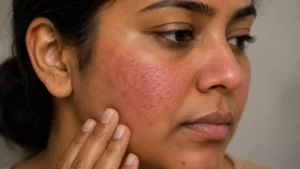
Rosacea, on the other hand, is a chronic skin condition that commonly affects the central face. Along with sensitivity and flushing, it can involve persistent redness, visible small blood vessels, and acne-like bumps or pustules.
The distinction is important because rosacea often requires more specific management than simply switching to products designed for sensitive skin.
Common Features of Sensitive Skin
Sensitive skin may react to:
- Fragrances and certain cosmetic ingredients
- Harsh cleansers or exfoliants
- Cold or dry weather
- Excessive washing
- Strong active ingredients
- Environmental changes
The redness or discomfort may appear temporarily and improve once the triggering factor is removed.
Common Features of Rosacea
Rosacea may present with:
- Persistent facial redness
- Recurrent flushing
- Visible small blood vessels
- Burning or stinging
- Inflammatory bumps or pustules
- Increased sensitivity to skincare products
- Greater sensitivity to sunlight and heat
Not everyone with rosacea experiences every symptom, and the condition can vary considerably between individuals.
Why Do Rosacea and Sensitive Skin Get Confused?
The overlap in symptoms is the main reason these conditions are often mistaken for one another.
Both can cause redness, stinging, burning, and discomfort after using certain skincare products. Both may also become worse with environmental stressors such as heat, cold, or excessive sun exposure.
However, the pattern of the reaction can provide useful clues.
With generally sensitive skin, redness may occur after exposure to an irritating product or environmental trigger and settle once the trigger is removed. With rosacea, redness may become increasingly persistent, recur frequently, or be accompanied by visible blood vessels and inflammatory lesions.
This is why simply describing the skin as “sensitive” may not provide enough information to determine what is actually happening.
What Causes Facial Redness in Rosacea?
Rosacea can involve changes in the skin’s vascular and inflammatory responses. These changes can contribute to flushing, persistent redness, and visible superficial blood vessels.
Common rosacea triggers include:
- Sun exposure
- Heat and hot environments
- Spicy foods
- Alcohol
- Emotional stress
- Hot beverages
- Certain skincare products or active ingredients
- Sudden temperature changes
Triggers are highly individual. Something that causes a flare-up in one person may have little effect on another.
Rosacea and Skin Barrier Damage
A compromised skin barrier can make already reactive skin feel even more uncomfortable. Excessive exfoliation, harsh cleansers, aggressive skincare routines, or inappropriate active ingredients may increase dryness, stinging, and irritation.
This can create a cycle in which a person tries increasingly strong products to correct redness or breakouts, only to experience further irritation.
For suspected rosacea, simplifying the skincare routine and avoiding known triggers can be an important part of overall management.
A Simple Self-Check: Could It Be Rosacea?
A self-check cannot diagnose rosacea, but these patterns may indicate that professional assessment is worthwhile.
Ask yourself:
- Does facial redness persist rather than disappearing quickly?
- Do you experience frequent or unexplained flushing?
- Can you see small blood vessels on the face?
- Do red bumps or pustules appear alongside the redness?
- Does your face burn or sting even when you are not using a new product?
- Does sunlight or heat consistently trigger a flare-up?
- Have your symptoms become more frequent or persistent over time?
If several of these features apply, it may be worth discussing your symptoms with a dermatologist or aesthetic physician rather than treating the skin as simply “sensitive.”
Why Treating Rosacea Like Sensitive Skin Can Be a Problem
A gentle skincare routine is generally important for reactive skin, but rosacea may require more than simply choosing products labelled “for sensitive skin.”
Using strong exfoliating acids, aggressive scrubs, multiple active ingredients, or inappropriate acne treatments may aggravate an already reactive complexion. Conversely, avoiding all active treatments without identifying the underlying condition may leave rosacea insufficiently managed.
The goal is therefore not to use more products, but to understand why the skin is reacting and select an approach appropriate to the diagnosis.
When Should You See a Dermatologist or Aesthetic Physician?
Occasional sensitivity after trying a new product may improve once the irritant is discontinued. However, persistent or recurrent symptoms warrant professional assessment.
Consider seeing a dermatologist or Aesthetic doctor if you experience:
- Persistent facial redness
- Frequent flushing
- Visible facial blood vessels
- Recurrent bumps or pustules
- Ongoing burning or stinging
- Increasing sensitivity to sunlight
- Symptoms that are becoming progressively more frequent
- Redness that does not improve with a gentle skincare routine
An accurate diagnosis is particularly important because several other conditions can also cause facial redness and irritation. A doctor can assess the pattern and appearance of the skin and determine whether rosacea, sensitivity, another inflammatory condition, or a combination of factors may be involved.
How Is Rosacea Managed?
Treatment depends on the type and severity of rosacea and the individual’s symptoms. Management may combine skincare, trigger avoidance, prescription or doctor-recommended topical therapies, and aesthetic procedures where appropriate.
Topical Treatments
Certain topical treatments may be recommended to manage inflammatory features of rosacea. Azelaic acid for rosacea, for example, may be used in appropriate patients to help address inflammatory lesions and redness.
The choice of topical treatment should be based on the individual’s skin condition and tolerance rather than simply adding an active ingredient to a skincare routine.
Laser Treatment for Visible Blood Vessels
For individuals with prominent superficial blood vessels or persistent vascular redness, certain laser or light-based treatments may be considered.
These procedures work differently from topical medications and are generally selected after assessing the type and extent of vascular changes present in the skin.
Trigger Management
Identifying personal triggers is an important component of long-term rosacea management. Keeping track of when flushing or irritation occurs can help identify patterns related to sunlight, heat, food, alcohol, skincare products, or other environmental factors.
Sun protection and a gentle skincare routine can also help reduce unnecessary irritation.
How Isya Aesthetics Approaches Rosacea and Sensitive Skin
At Isya Aesthetics, the first step is distinguishing between ordinary skin sensitivity and an underlying dermatological condition such as rosacea. Treatment recommendations are based on the appearance and behaviour of the skin, the patient’s symptoms, known triggers, and individual treatment goals.
Depending on the clinical presentation, management may include skincare guidance, appropriate topical treatments, trigger-management strategies, or procedures aimed at visible vascular changes.
The objective is not simply to reduce redness temporarily, but to understand the underlying pattern and develop a treatment approach that the patient’s skin can tolerate over time.
Frequently Asked Questions
Is rosacea the same as sensitive skin?
No. Sensitive skin describes a tendency to react easily, while rosacea is a chronic dermatological condition that may cause persistent redness, flushing, visible blood vessels, and inflammatory bumps.
How can I tell if I have rosacea or sensitive skin?
Persistent redness, recurrent flushing, visible blood vessels, and inflammatory bumps are more suggestive of rosacea. However, these features can overlap with other skin conditions, so a dermatologist should make the diagnosis.
What commonly triggers rosacea?
Common triggers include sunlight, heat, spicy foods, alcohol, hot beverages, stress, temperature changes, and certain skincare products. Triggers vary between individuals.
Can sensitive skin turn into rosacea?
Sensitive skin itself does not necessarily “turn into” rosacea. However, people who experience frequent facial sensitivity may notice symptoms that overlap with rosacea, making professional assessment useful when redness becomes persistent or recurrent
Can azelaic acid help rosacea?
Azelaic acid may be recommended for some individuals with rosacea, particularly when inflammatory bumps or pustules are present. Its suitability depends on the individual’s skin and should be determined as part of an appropriate treatment plan.
Can laser treatment help facial redness caused by rosacea?
Certain laser or light-based treatments may help reduce the appearance of visible blood vessels and vascular redness in selected patients. A dermatologist should assess the skin before recommending a procedure.
Should I stop using active skincare products if I have rosacea?
Not necessarily. Some active ingredients may be appropriate, while others can aggravate irritation. Instead of stopping every active ingredient, it is better to have your skincare routine assessed and simplify it where necessary.
When should I see a dermatologist or doctor for facial redness?
Persistent redness, frequent flushing, visible blood vessels, recurrent inflammatory bumps, or ongoing burning and stinging are good reasons to seek professional evaluation.
Is rosacea treatable?
Rosacea is generally considered a chronic condition, but its symptoms can often be managed. Treatment focuses on controlling symptoms, reducing triggers, and maintaining the skin’s health over time.
Where can I get rosacea treatment in Vasant Vihar, New Delhi?
If you are experiencing persistent redness, flushing, or other symptoms suggestive of rosacea, a dermatologist-led assessment can help determine the cause and appropriate management approach. Isya Aesthetics provides dermatology, skin and aesthetic care in Vasant Vihar, New Delhi.
Conclusion
Rosacea and sensitive skin can look remarkably similar, but they require different approaches. Temporary product-related sensitivity may improve when an irritant is removed, while persistent redness, flushing, visible blood vessels, and inflammatory bumps may point toward rosacea.
Recognizing the difference can help prevent unnecessary irritation from inappropriate skincare and ensure that persistent symptoms receive appropriate dermatological attention.
If facial redness or a burning sensation on the face keeps returning despite a gentle skincare routine, professional assessment can help identify what is actually causing it.
Book a dermatologist or doctor consultation at Isya Aesthetics to get an accurate diagnosis and a treatment plan that fits your actual skin condition.