Skip to content


Table of Contents
Skin health is often overlooked until a visible concern appears. However, regular skin self-exam for skin cancer can help detect early changes before they become serious.
Many skin cancers, including melanoma, can be identified at an early stage through simple observation. The key is knowing what to look for, how to track changes, and when to seek medical advice.
This guide explains how to do a skin self-check at home, what signs to watch for, and when a professional skin cancer screening becomes necessary.
Why Skin Self-Exams Are Important
Skin cancer often develops slowly and may not cause pain in the early stages. This makes visual monitoring one of the most effective ways to detect problems early.
A regular skin cancer self-examination helps you:
- Notice new or changing moles
- Track changes in existing spots
- Identify unusual skin growths
- Take action before the condition progresses
Early detection significantly improves treatment outcomes.
How to Do a Skin Self-Exam at Home
A proper skin self-check at home should be done once a month. It takes only a few minutes but can make a big difference.
Step-by-Step Guide
Start in a well-lit room with a full-length mirror and a hand mirror.
- Check Your Face and Scalp
Examine your face, ears, neck, and scalp. Use a comb or ask for help to check the scalp. - Look at Your Upper Body
Check your chest, shoulders, arms, and underarms. Women should also examine under the breasts. - Inspect Your Back
Use a mirror to check your upper and lower back, including the back of your neck. - Check Your Lower Body
Examine your legs, feet, soles, and between your toes. - Don’t Miss Hidden Areas
Look at nails, palms, and even areas like the groin or buttocks.
This process helps you learn your normal skin pattern, making it easier to notice suspicious skin changes.
What to Look for in a Mole
One of the most important parts of a skin self-exam for skin cancer is identifying changes in moles.
The ABCDE Rule for Melanoma
Use this simple guide when examining moles at home:
- A – Asymmetry: One half does not match the other
- B – Border: Edges are irregular or uneven
- C – Colour: Uneven colour or multiple shades
- D – Diameter: Larger than 6 mm
- E – Evolving: Any change in size, shape, or colour
If a mole shows any of these signs, it should be checked by a doctor.
Early Signs of Skin Cancer
Recognising early signs is essential for timely treatment.
Common Warning Signs
- New or changing moles
- A sore that does not heal
- Red or dark patches that grow
- Itching, bleeding, or crusting lesions
- Rough or scaly patches
These are often early indicators of skin damage or potential skin cancer.
Skin Self-Check vs Professional Screening
While a skin self-check at home is useful, it has limitations.
Self-exams help you notice visible changes, but they cannot:
- Confirm whether a lesion is cancerous
- Detect deeper skin issues
- Replace clinical examination tools
This is where professional screening becomes important.
When Should You Get a Professional Skin Cancer Screening?
You should consider a professional screening if you notice:
- Any new or changing moles
- Spots that look different from others
- Persistent skin changes
- Rapid growth in any lesion
Regular screening is also recommended if you:
- Have a history of sun exposure
- Have a family history of skin cancer
- Have multiple moles or sensitive skin
Skin Cancer Screening at Isya Aesthetics
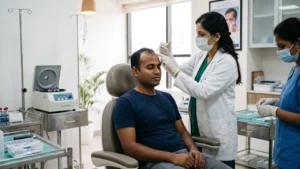
At Isya Aesthetics, skin cancer screening focuses on detailed evaluation and early detection using clinical expertise.
What the Screening Involves
The process includes:
- A full skin examination by a trained doctor
- Close assessment of moles and lesions
- Identification of suspicious skin changes
- Guidance on whether further testing is needed
How It Helps
- Detects early signs of skin cancer
- Differentiates between harmless and concerning lesions
- Provides clarity and peace of mind
- Helps plan timely treatment if required
This approach ensures that any concern identified during a skin self-exam for skin cancer is evaluated accurately.
How Often Should You Do Skin Self-Exams?
- Monthly self-exam is recommended
- Track changes using photos if needed
- Annual professional screening is advisable for most individuals
People with higher risk may need more frequent check-ups.
Tips for Effective Skin Self-Examination
To make your self-exam more effective:
- Perform checks in good lighting
- Use mirrors to see difficult areas
- Take photos to track changes
- Be consistent every month
- Do not ignore small changes
Regular monitoring helps you detect patterns and notice even subtle differences.
Conclusion
A skin self-exam for skin cancer is an important habit that helps you stay aware of changes in your skin. However, self-exams alone are not enough for accurate diagnosis.
Isya Aesthetics offers professional skin cancer screening with a detailed and medically guided approach to identify early signs and assess suspicious skin changes. These evaluations are performed under the supervision of experienced dermatologists or dermatologically trained physicians, ensuring careful examination and reliable outcomes.
Located in Vasant Vihar, South Delhi, and serving patients across Delhi and nearby areas, Isya Aesthetics provides personalised skin assessment and screening services. Patients can explore the About Us sections to understand the clinic’s expertise before scheduling a consultation.
Regular self-exams are a great first step but they don’t replace expert evaluation. If you’ve noticed any new or changing spots, schedule a professional skin cancer screening today for a thorough and accurate assessment.
FAQs
How to do a skin self-exam at home?
You can perform a skin self-check at home by examining your entire body in a well-lit space using mirrors. Check all areas, including the scalp, back, and feet, and look for any new or changing spots.
What are the early signs of skin cancer?
Early signs include new or changing moles, uneven colour, irregular borders, and spots that itch, bleed, or do not heal.
How often should I check my skin for cancer?
A monthly skin self-exam for skin cancer is recommended. Regular monitoring helps detect changes early.
What is the ABCDE rule for melanoma?
It is a guide to identify suspicious moles based on asymmetry, border, colour, diameter, and evolving changes.
Can a skin self-exam detect skin cancer?
A self-exam can help you notice warning signs, but it cannot confirm a diagnosis. A professional screening is needed for accurate evaluation.
When should I see a doctor for a mole?
If a mole changes in size, shape, or colour, or shows symptoms like itching or bleeding, you should consult a doctor immediately.