Skip to content


Table of Contents
For years, Polycystic Ovary Syndrome (PCOS) has been one of the most commonly diagnosed hormonal disorders affecting women of reproductive age. But clinically, the name has always been somewhat limiting. It placed most of the focus on ovarian cysts and irregular periods, even though those are often symptoms rather than the underlying driver of the disorder itself.
On May 12, 2026, an international panel of experts known as the Global Name Change Consortium officially announced the proposed transition from PCOS to PMO — Polyendocrine Metabolic Ovarian Syndrome through a health policy paper published in The Lancet. The shift reflects a growing understanding that the disorder involves broader hormonal, metabolic, and systemic dysfunction rather than being limited mainly to ovarian health.
In practice, one of the biggest misconceptions many women still have is that they cannot have PCOS unless they have visible ovarian cysts or severely irregular periods. But underlying insulin-related and hormonal dysfunction often begins much earlier.
“Ovarian cysts and period irregularities are symptoms. They are not the cause of the problem,” says Dr. Kiran Sethi. “The problem is a metabolic and endocrine disruption that affects many systems of the body.”
What Is PMOS?
PMOS stands for Polyendocrine Metabolic Ovarian Syndrome and is the proposed updated name for PCOS. The shift in terminology reflects a broader understanding of the disorder as one that can affect multiple systems throughout the body and not only the ovaries.
Research increasingly links PMOS with:
- insulin resistance
- hormonal dysregulation
- visceral fat accumulation
- inflammation
- cardiovascular risk
- skin and hair concerns
- ovulatory dysfunction
- metabolic health disturbances
This shift reflects a broader understanding of the condition beyond reproductive health alone. It changes the way both patients and clinicians understand the disorder itself.
Why the Name PCOS Was Misleading
A major limitation of the term “Polycystic Ovary Syndrome” is that many women with PCOS do not actually have ovarian cysts at all. What often appears as “cysts” on ultrasound are usually immature or arrested follicles caused by disrupted ovulation and hormonal imbalance rather than true pathological ovarian cysts. Because the disorder became so strongly associated with traditional reproductive symptoms, many patients failed to recognize symptoms outside reproductive health as part of the same condition. “People don’t realize that the condition is actually much more than that,” says Dr. Kiran. “Then they avoid accepting their diagnosis or they don’t get diagnosed.” This matters because delayed recognition often allows the underlying dysfunction to progress silently for years
PMOS Is More Than a Reproductive Disorder
One of the most important aspects of the proposed shift to PMOS is the recognition that the disorder extends far beyond fertility or menstrual health alone.
From a physiological perspective, early insulin resistance and visceral fat accumulation can create significant endocrine disruption throughout the body. Over time, this may contribute to:
- metabolic dysfunction
- cardiovascular risk
- chronic inflammation
- acne and hirsutism
- hair thinning
- fatigue and weight gain
- long-term hormonal imbalance
“Early insulin resistance and visceral fat causes significant disruption with an increase in risk of many health conditions including cardiovascular risk, and skin and hair issues,” explains Dr. Kiran.
This is especially relevant in India, where insulin resistance and metabolic disorders are increasingly being seen at younger ages.
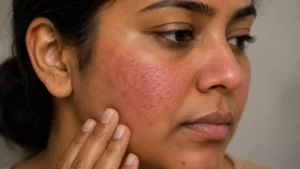
The Skin Often Shows the Earliest Signs
A commonly overlooked aspect of PMOS is that the earliest signs often appear through the skin and hair long before reproductive symptoms become obvious.
In aesthetic and skin practice, this pattern becomes very clear. Many patients initially seek help for acne, hair thinning, pigmentation changes, or excess facial hair without realizing these may be connected to underlying insulin and hormonal imbalance.
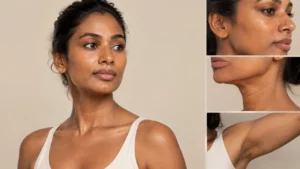
“In aesthetic and skin practice, we often see PMOS before it progresses,” says Dr. Kiran. “We see skin manifestations like acne, hirsutism, hair thinning, and acanthosis nigricans.”
However, when periods remain relatively regular or ovarian cysts are absent, patients often underestimate the importance of early intervention.
“Often skin manifestations happen first, without much other symptomology,” she explains. “And when there are no ovarian cysts or missed periods, patients think it’s not worth making lifestyle changes to improve and prevent further issues.”
This is one of the key reasons earlier recognition matters. By the time reproductive symptoms become more severe, metabolic dysfunction may already be significantly established.
Common Symptoms of PMOS
Because PMOS has a wide range of physiological effects, symptoms may vary significantly from person to person.
Common symptoms may include:
- irregular periods
- acne
- hirsutism (excess facial or body hair)
- hair thinning
- insulin resistance
- weight gain
- fatigue
- acanthosis nigricans (skin darkening)
- ovulatory dysfunction
- inflammation-related skin and hair concerns
For many women, these symptoms may develop gradually and remain undiagnosed for years.
Why Earlier Diagnosis Matters
One of the biggest advantages of the shift towards the term “PMOS” is the possibility of earlier diagnosis and preventive intervention.
“Gynecologists, endocrinologists, and physicians will have to diagnose earlier,” says Dr. Kiran, “before the problem progresses.”
Earlier recognition allows greater focus on:
- insulin resistance
- metabolic health
- preventive lifestyle modification
- hormonal regulation
- cardiovascular risk reduction
- long-term skin and hair health
rather than waiting until reproductive symptoms become more advanced.
This broader understanding also encourages clinicians to look beyond ovarian symptoms alone and recognize the disorder through a more complete metabolic and endocrine lens
A 360° Approach to PMOS & PCOS Care at Isya Aesthetics
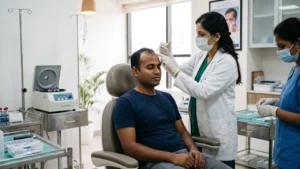
At Isya Aesthetics, we approach PCOS and PMOS through a more comprehensive and multidisciplinary lens rather than treating only isolated symptoms. Because hormonal and metabolic dysfunction can affect the skin, hair, weight, inflammation, and overall well-being simultaneously, treatment often requires a more integrated approach.
Under the guidance of Dr. Kiran Sethi, Isya offers a 360-degree approach to PCOS care that combines:
- nutritional and lifestyle guidance
- acne and pigmentation treatments
- excess facial and body hair management
- fat loss and metabolic wellness support
- hair fall and scalp health treatments
- advanced skin and laser technologies tailored to hormonal concerns
Many women first seek treatment for visible symptoms like acne, hair thinning, stubborn weight gain, or excess facial hair without realizing these may be connected to underlying hormonal imbalance and insulin resistance. At Isya, the focus is not only on improving visible symptoms, but also on supporting long-term hormonal, metabolic, and skin health through a more personalized and preventive approach. Ready to take control of your hormonal health? Contact Isya Aesthetics today to schedule your personalized PMOS evaluation.
FAQs About PMOS
If my periods are regular, can I still have PMOS?
Yes. Many women with PMOS may still have regular or near-regular periods while experiencing symptoms like acne, hair thinning, fatigue, weight gain, or insulin resistance. Hormonal imbalance can often begin much earlier than noticeable reproductive symptoms.
Why is the name changing from PCOS to PMOS?
Experts believe the older term PCOS focused too heavily on ovarian cysts and missed periods, even though the condition affects much more than reproductive health alone. The term PMOS better reflects the hormonal, metabolic, and whole-body nature of the condition.
Do you need ovarian cysts to have PMOS?
Not always. Many women with PMOS may not have visible ovarian cysts at all. Symptoms can still appear through the skin, hair, metabolism, hormones, or insulin resistance.
What are some early signs of PMOS?
The earliest signs can look different from person to person, but may include:
acne
excess facial or body hair
hair thinning
unexplained weight gain
fatigue
skin darkening around the neck or underarms
difficulty losing weight
In many women, these symptoms can appear before menstrual changes become noticeable.
How is insulin resistance connected to PMOS?
Insulin resistance is considered one of the major underlying factors associated with PMOS. Over time, it can affect hormones, metabolism, skin, hair, weight regulation, and long-term health.
Can PMOS affect skin and hair health?
Yes. Many women first notice symptoms like acne, pigmentation changes, excess facial hair, or hair thinning before realizing there may be an underlying hormonal imbalance.
Why is early diagnosis important?
Earlier diagnosis allows doctors to identify hormonal and metabolic imbalance before the condition progresses further. Early lifestyle changes and medical guidance can help support long-term hormonal, metabolic, skin, and reproductive health.
Is PMOS only related to gynecology?
No. PMOS is increasingly understood as a condition that can affect multiple systems in the body, including hormones, metabolism, skin, hair, and overall health. This is why a more collaborative approach to care is often important.
How does Isya Aesthetics approach PCOS and PMOS care?
At Isya Aesthetics, PCOS and PMOS are approached through a more comprehensive and personalized plan. Under the guidance of Dr. Kiran Sethi, treatment approaches may include nutritional guidance, acne and pigmentation treatments, excess hair management, metabolic wellness support, fat loss programs, and hair fall treatments tailored to hormonal concerns.