Skip to content



Table of Contents
Laser hair removal is one of the most sought‑after aesthetic procedures for achieving long‑term reduction of unwanted hair. When performed correctly, it significantly reduces hair growth and eliminates the need for frequent shaving, waxing, or plucking. However, in rare cases, some patients experience unexpected outcomes such as paradoxical hypertrichosis where hair growth increases instead of decreasing or struggle with hirsutism, which is excessive hair growth driven by hormonal influences. Understanding why these situations occur and how to manage them is essential for effective and satisfying hair reduction results.
What Is Paradoxical Hypertrichosis?
Paradoxical hypertrichosis refers to the phenomenon where hair grows more abundantly or becomes thicker and darker in areas that have undergone laser hair removal. This is the opposite of the intended effect and can be confusing or distressing for patients who expected hair reduction.
This condition does not mean the laser is ineffective; rather, it reflects a rare reaction in which the treated follicles or surrounding skin respond unpredictably, stimulating hair growth instead of destroying the hair‑producing structures. At Isya Aesthetics, our goal is to explain these possibilities clearly and prevent them through careful planning and expert care.
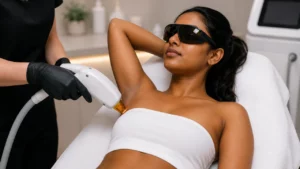
LHR at Isya: At Isya Aesthetics, laser hair removal is customised based on individual hair type, skin tone, and growth patterns. Advanced systems available at the clinic, such as SoftTouch LHR with MOTUS MOVEO technology and multi‑wavelength platforms, allow precise targeting of hair follicles with minimal discomfort and high safety for most skin types. These technologies ensure effective reduction even in hormone‑sensitive areas and challenging hair growth patterns.
What Is Hirsutism and How It Differs
Hirsutism is a condition in which women develop excessive terminal hair (coarse, dark hair) in patterns more typical of male hair distribution, such as the face, chest, and abdomen. It is most often associated with androgen excess and conditions such as Polycystic Ovary Syndrome (PCOS).
Unlike paradoxical hypertrichosis, which is a response to the laser procedure, hirsutism is driven by underlying hormonal factors and can be present before any treatment begins.
At Isya Aesthetics, laser hair reduction protocols are adapted to address hirsutism, especially in patients with PCOS‑related hair growth. These customised plans take hormonal sensitivity and growth patterns into account and deliver treatments that are safer and more effective for hormone‑driven hair.
Why do they Happen?
| Paradoxical Hypertrichosis | Hirsutism |
| Rare increase in hair growth after laser treatment due to partial follicle stimulation or sub-optimal laser settings | Excess hair growth in women due to hormonal imbalance, often linked to androgen excess or PCOS |
| Occurs at or near treated areas where follicles are stimulated rather than destroyed | Follows male-pattern distribution: face, chest, abdomen |
| Triggered by incorrect laser energy, wavelength mismatch, hormonal issues or resistant follicles | Driven by high androgen levels, genetic predisposition, or endocrine conditions |
| Temporary and treatment-related; can sometimes be corrected by adjusting laser protocols | Chronic and hormone-related; requires tailored, hormone-aware laser hair removal or adjunct therapy |
| Typically localized and procedure-dependent | Often systemic and generalized; not caused by the procedure itself |
How Isya Prevents and Treats These Responses
At Isya Aesthetics, personalised care and tailored protocols are central to minimising the risk of paradoxical hypertrichosis and effectively managing hirsutism.
Comprehensive Consultation and Analysis
Every laser hair removal plan begins with a detailed assessment of hair type, skin type, medical and hormonal history, and previous hair removal experiences. This allows clinicians to identify potential risk factors and customise energy settings appropriately.
Choosing the Right Technology
Not all lasers work equally for every skin and hair type. At Isya, we use advanced systems including:
- Diode lasers
- Alexandrite lasers
- Nd:YAG lasers
- Multi‑wavelength solutions
These technologies allow us to target hair follicles effectively while reducing the risk of unwanted stimulation.
- SoftTouch Laser Hair Removal with MOTUS MOVEO technology for comfortable, effective follicle targeting even in sensitive areas
- Multi‑wavelength solutions, such as triple‑combination lasers and Nd:YAG variants, to match hair colour, thickness, and skin tone

Tailored Protocols for Hirsutism
For patients with hormone‑driven hair growth, such as those with PCOS, tailored laser protocols are designed to:
- Increase session frequency if needed
- Modify energy parameters to suit coarse, androgen‑related hair
- Monitor results over time with photographic and clinical assessment
Adjunctive and Alternative Options
When paradoxical hair growth persists, or when hair is highly resistant due to hormonal influences, alternative or complementary options such as electrolysis may be recommended. Electrolysis directly destroys individual follicles and can be combined with laser strategies for comprehensive management.
Tips to Enhance Results and Reduce Risk
To maximise the success of laser hair removal and reduce the risk of paradoxical responses:
- Follow the full recommended series of sessions
- Space treatments according to hair growth cycles
- Protect treated areas from sun exposure both before and after sessions
- Inform your clinician of any medications (such as those influencing hair growth)
- Maintain follow‑up and adjustments as needed
Conclusion
Paradoxical hypertrichosis and hirsutism are distinct phenomena that can affect outcomes in laser hair removal. Paradoxical hypertrichosis refers to rare increased hair growth after laser treatment, while hirsutism is a hormone‑related condition characterized by excessive hair growth in women.
By using advanced laser technologies and personalised treatment plans, Isya Aesthetics minimises the risk of paradoxical responses and provides effective solutions for hormone‑related hair conditions. Customised strategies and ongoing monitoring help deliver long‑lasting hair reduction tailored to each individual’s needs. Also Isya can help treat paradoxical hypertrichosis should it occur!
FAQs
What is paradoxical hypertrichosis?
Paradoxical hypertrichosis is a rare reaction where hair growth increases instead of decreasing after laser hair removal.
What is hirsutism?
Hirsutism refers to excessive male‑pattern hair growth in women, often due to hormonal imbalances like PCOS.
Can laser hair removal treat hormonal hair growth?
Yes. With proper protocols and customised settings, laser hair removal can significantly reduce hormone‑related hair growth, such as in PCOS.
Why does laser sometimes cause increased hair growth?
In rare cases, hormonal issues, improper energy settings or partial follicle stimulation may activate hair follicles instead of destroying them.
How many sessions are needed for best results?
Most patients require multiple sessions to coincide with hair growth cycles and achieve optimal reduction.
Is laser hair removal safe for all skin types?
Yes, when performed by experienced clinicians using the right technology tailored to your skin tone and hair type.