Skip to content


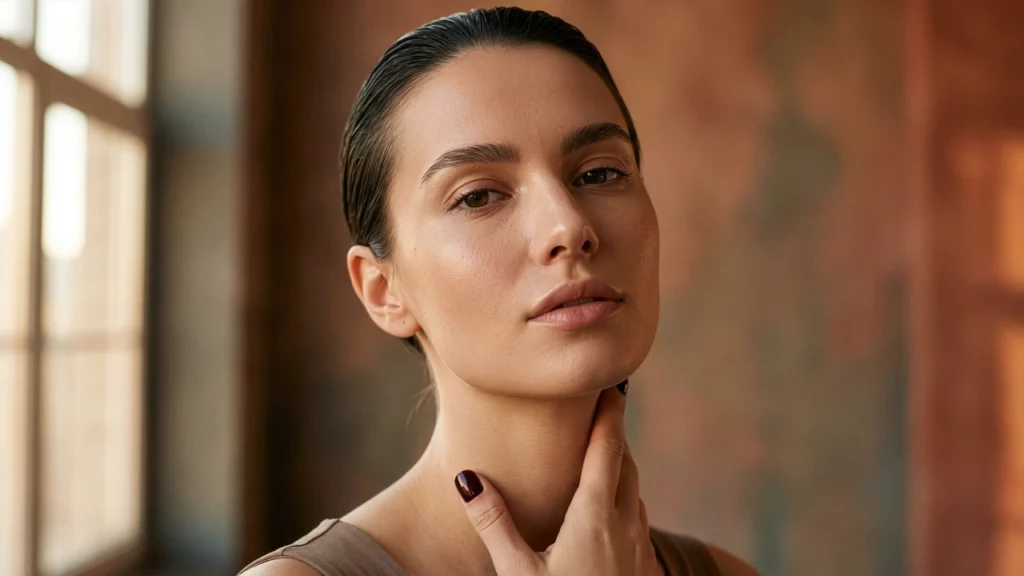
Table of Contents
Facial harmony is rarely about perfection. In fact, most faces are naturally asymmetrical in small ways that often go unnoticed in everyday life. One eyebrow may sit slightly higher, one cheek may appear fuller, or one side of the jawline may feel sharper than the other. These subtle differences are completely normal and often part of what gives the face individuality and character.
But over time, many people begin noticing that one side of the face appears heavier, less lifted, more hollow, or less defined, especially in photographs, selfies, or video calls. What once felt subtle may suddenly become difficult to ignore.
Facial asymmetry often becomes more noticeable with age because collagen, fat volume, muscle tone, and skin elasticity decline unevenly across different areas of the face.
At Isya Aesthetics, Non-Surgical Facial Balancing is approached through a more individualized and medically informed lens, one that focuses not on creating “perfect symmetry,” but on improving overall balance, and structural support in a natural-looking way.
Is Facial Asymmetry Normal?
Yes, almost every face has some degree of asymmetry.
Facial asymmetry may involve differences in skeletal structure, soft tissue volume, muscle activity, skin laxity, or fat compartment distribution. One eye may appear slightly smaller. One side of the jaw may feel more prominent. Even the lips and smile can naturally differ slightly from one side to the other. Most of these differences are subtle and rarely noticeable in motion or conversation.
However, certain factors can make asymmetry appear more visible over time, including:
- Aging and collagen loss
- Skin laxity
- Uneven fat volume loss
- Muscle imbalance
- Jaw tension or teeth grinding
- Sleep position
- Chewing habits
- Posture
- Repetitive facial tension
- Sun exposure
- Weight fluctuations
Many people first become aware of asymmetry through photographs or front facing cameras because cameras flatten depth and exaggerate contour differences that are less noticeable in real life.
Why Faces Often Become More Uneven With Age
Aging does not happen uniformly across the face.
Over time, the face gradually loses:
- Collagen
- Elasticity
- Supportive fat volume
- Bone support
- Skin firmness
But these changes rarely occur evenly on both sides. One cheek may lose volume faster. One side of the jawline may soften earlier. One side of the lower face may begin appearing heavier because of differences in muscle activity, tissue descent, or skin laxity.
This is one reason many people feel their face suddenly looks “different” in photos even though the changes have actually been developing gradually for years.
Facial Harmony Matters More Than Perfect Symmetry
One of the biggest misconceptions in aesthetics is the idea that beauty comes from perfect symmetry. In reality, faces that appear natural, expressive, and attractive are rarely perfectly symmetrical.
What often matters more is balance.
Facial harmony refers to how different features work together proportionally, the relationship between the cheeks, jawline, chin, skin firmness, and overall contour structure.
In aesthetic practice, the goal is usually not to make both sides of the face identical. Overcorrection can easily create an unnatural or “overdone” appearance. Instead, modern facial balancing treatment approaches aim to subtly improve contour definition, support the facial framework, and restore proportion while preserving natural facial character and expression.
What Is Non-Surgical Facial Balancing?
Non-Surgical Facial Balancing focuses on improving proportion, and contour without surgery or significant downtime. Rather than trying to create perfect symmetry, the goal is usually to restore balance between facial features in a way that still looks natural and expressive.
In many cases, facial imbalance is not caused by a single issue alone. Small differences in muscle activity, collagen loss, skin laxity, volume distribution, posture, or jaw tension can gradually affect how balanced the face appears over time.
This is why modern facial balancing approaches are often highly individualized. Some faces may benefit more from improved support for the facial frame and contour definition, while others may require attention to lower face heaviness, asymmetrical movement, skin firmness, or volume loss.
In aesthetic practice, the most natural-looking results rarely come from dramatically changing the face. They come from subtle refinements that improve proportion, soften imbalance, and support facial harmony while preserving individuality and natural expression.
How Non-Surgical Facial Balancing Treatments Work
At Isya Aesthetics, facial balancing treatment plans are carefully selected based on the specific type of asymmetry present rather than applying the same treatment to every face.
According to Dr. Kiran Sethi, muscular asymmetries often respond particularly well to carefully placed Botox adjustments.
“For example, if brow elevation is asymmetric, precise Botox placement can often help improve balance very naturally,” explains Dr. Kiran. “If asymmetry involves the jawline or cheeks, fillers can help restore proportion and contour, sometimes alongside Botox if the masseter muscles are contributing to imbalance.”
This more customized approach helps improve overall balance while preserving authentic facial movement and expression.
Treatments Used for Facial Balancing at Isya Aesthetics
Depending on facial anatomy, skin quality, muscle activity, and dermal concerns, facial balancing treatments at Isya Aesthetics may include either or both energy based-treatments or injectables.
Energy-Based Skin Tightening Treatments
Energy-based skin tightening treatments use technologies such as ultrasound, radiofrequency, or thermal stimulation to improve skin firmness and collagen support. These treatments are often incorporated into facial balancing plans for contour refinement and skin laxity concerns.
These treatments may help improve:
- Under eye hollows
- Jawline definition
- Lower face heaviness
- Cheek contour balance
- Skin firmness
- Collagen remodeling
- Mild asymmetry
- Facial sculpting and contour support
Rather than dramatically altering the face, treatments are typically combined thoughtfully to improve contour definition, structural support, and overall facial harmony in a subtle and balanced way.
Some energy based treatments include:
MIFU
MIFU uses focused ultrasound energy to support skin tightening and improve lower face definition by stimulating deeper structural layers beneath the skin. It is often used for mild skin laxity, contour softening, and jawline refinement without surgery or downtime.
Ultherapy
Ultherapy is an ultrasound-based treatment designed to gradually lift and firm the skin by supporting natural collagen remodeling. It is commonly used to improve facial contours, skin laxity, and early structural sagging in a subtle and progressive way.
V Face Contouring
V Face Contouring uses targeted muscle stimulation to improve facial proportions, jawline definition, and facial sculpting through non-surgical contour refinement. The approach is often tailored for individuals concerned about facial heaviness, softer jawlines, under eye hollows or mild asymmetry. It also helps prevent the need for toxin.
Injectables: The “Liquid Facelift” Approach to Facial Harmony
One of the signature non-surgical facial balancing approaches at Isya Aesthetics is the liquid facelift, a carefully customized combination of Botox, fillers, skin boosters, and collagen stimulators such as Sculptra designed to improve facial balance and support without surgery.
Instead of creating dramatic change, the goal is often to subtly restore proportion, soften heaviness, improve contour transitions, and support healthier skin structure over time.
In practice, the most natural-looking results usually come from conservative, well-balanced adjustments rather than aggressive correction. Facial harmony is rarely about making the face perfectly symmetrical; it is about creating balance that still looks like you.
Thread Lifts
Thread lifts use dissolvable medical threads to provide subtle lifting and repositioning support for areas affected by skin laxity or tissue descent. They may help improve contour definition while also stimulating collagen production over time.
Botox or Dysport
Botox or Dysport is commonly used to relax targeted facial muscles that contribute to asymmetrical movement, jaw tension, or dynamic lines. In facial balancing, it is often used strategically to create more proportionate and harmonious facial contours.
Dermal Fillers
Dermal fillers are used to restore volume, improve contour transitions, and support facial proportions in areas affected by volume loss or structural imbalance. When performed conservatively, fillers can help create softer and more balanced facial contours.
Collagen-Stimulating Injectables Like Sculptra
Collagen stimulators such as Sculptra work gradually by encouraging the skin’s natural collagen production over time. They are often used to improve facial structure, skin quality, facial lifting and overall support in a more regenerative and long-term way.
Can Lifestyle Habits Affect Facial Asymmetry?
Surprisingly, yes.
Over time, repetitive habits may gradually influence facial tension patterns, muscle activity, and contour changes. This may include:
- Consistently sleeping on one side
- Chewing more heavily on one side
- Jaw clenching or teeth grinding
- Prolonged screen posture
- Uneven sun exposure while driving
- Repetitive facial tension
While these factors may not fully “cause” asymmetry, they can contribute to uneven muscle activity and structural imbalance becoming more noticeable over time.
Why Facial Asymmetry Often Looks Worse in Photos
Many people first notice uneven facial contours through selfies, front-facing cameras, or video calls.
Part of this is psychological; we are seeing our own faces more frequently and more critically than ever before. But cameras can also exaggerate asymmetry by flattening facial depth, distorting proportions, and emphasizing uneven lighting or angles.
In aesthetic practice, people are often far more aware of minor asymmetries than others around them actually notice.
This is why individualized assessment is important before considering any asymmetrical face correction treatment.
Non-Surgical Facial Balancing at Isya Aesthetics
Looking for non-surgical facial balancing in Delhi? Explore personalized facial contouring and skin-tightening treatments at Isya Aesthetics designed to improve facial balance, definition, and overall harmony with minimal downtime.
We approach facial harmony treatment through detailed facial assessment, structural understanding, and personalized planning rather than standardized correction.
Led by Dr. Kiran Sethi, our treatments are tailored based on facial anatomy, muscle movement, skin quality, collagen support needs, and overall aesthetic goals. Treatment suitability and outcomes vary depending on facial anatomy, skin quality, muscle activity, and individual aesthetic goals.
The focus is not on chasing artificial perfection but on creating a more balanced, refreshed, and naturally sculpted appearance while preserving individuality and expression.
FAQs About Facial Asymmetry & Non-Surgical Facial Balancing
Is it normal for one side of the face to look different?
Yes. Mild facial asymmetry is extremely common, and almost no face is perfectly symmetrical.
Why does facial asymmetry become more noticeable with age?
As the face gradually loses collagen, elasticity, and structural support, volume loss and skin laxity may develop unevenly, making asymmetry appear more visible over time.
Can sleeping position affect facial asymmetry?
Long-term repetitive pressure from sleeping consistently on one side may contribute to subtle differences in skin creasing, muscle tension, or contour changes over time.
What is non-surgical facial balancing?
Non-surgical facial balancing uses treatments like Botox, fillers, collagen stimulation, skin tightening, and contouring technologies to improve facial harmony and proportions without surgery.
Which treatments work best for mild facial asymmetry?
In milder cases, technologies such as MIFU or V Face Contouring may help improve contour balance and lower face definition. Some individuals may also benefit from carefully placed Botox or dermal fillers depending on muscle activity, volume distribution, or facial movement patterns. A personalized assessment is important to determine the most suitable treatment approach.
What is V Face Contouring?
V Face Contouring is often used for mild facial asymmetry, lower face heaviness, and softer jawline definition. The treatment helps support a more lifted and V-shaped facial appearance by improving contour balance and stimulating deeper muscular and structural support involved in facial elevation.
Will facial balancing make my face look unnatural?
Modern facial balancing treatment approaches are designed to create subtle, natural-looking refinement rather than dramatic or overly altered results.