Skip to content


Table of Contents
Skin aging, acne scarring, dullness, and early texture changes are often signs that the skin’s natural repair mechanisms have slowed down. While topical products can support surface hydration, true skin regeneration requires stimulation at a deeper level. This is where the PRP facial stands apart as a medically guided skin rejuvenation treatment.
A PRP facial, also known as a PRP facelift or platelet-rich plasma facial, is a dermatologist-performed procedure that uses your body’s own regenerative potential to improve skin quality, tone, texture, and overall health. At Isya, PRP skin treatment is integrated into advanced aesthetic protocols designed to repair, strengthen, and revitalise the skin rather than simply mask surface concerns.
This guide explains what PRP facial treatment is, how it works, its benefits, who it is suitable for, and what kind of results you can realistically expect.
What Is a PRP Facial?
A PRP facial is a regenerative skin treatment that uses platelet-rich plasma, derived from the patient’s own blood, to stimulate collagen production, cellular repair, and tissue renewal. Platelets are rich in growth factors that play a critical role in wound healing and skin regeneration.
In a PRP skin treatment, a small amount of blood is drawn and processed to concentrate platelets. This platelet-rich plasma is then applied or delivered into the skin using medical techniques such as microneedling or targeted injections, depending on the indication.
Unlike conventional facials that focus on cleansing or exfoliation, a platelet-rich plasma facial works at the biological level, activating the skin’s natural healing response to improve structure and quality from within.
What Is a PRP Facelift?
A PRP facelift is an advanced form of PRP facial that focuses on skin rejuvenation and mild lifting without surgery. It does not involve implants, fillers, or incisions. Instead, it improves skin firmness, elasticity, and tone by stimulating collagen and elastin over time.
The PRP facelift is commonly chosen by individuals who:
- Want visible skin improvement without surgery
- Have early signs of aging such as fine lines or laxity
- Are looking for natural-looking rejuvenation
- Prefer regenerative treatments over synthetic injectables
Because it relies on the body’s own growth factors, a PRP facelift offers gradual, progressive improvement rather than dramatic overnight change.
How Does PRP Facial Work?
Understanding how PRP facial works helps explain why it is used for a wide range of skin concerns.
Step 1: Blood Collection and PRP Preparation
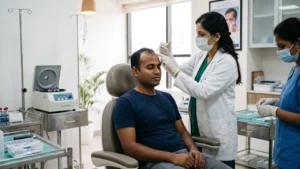
A small quantity of blood is drawn from the patient. This blood is placed into a centrifuge, which separates platelet-rich plasma from other blood components. The resulting PRP contains a high concentration of growth factors.
Step 2: Skin Preparation
The skin is cleansed thoroughly. Depending on the treatment plan, numbing cream may be applied to ensure comfort.
Step 3: PRP Delivery
The platelet-rich plasma is delivered into the skin using techniques such as:
- Microneedling-assisted PRP infusion
- Targeted intradermal PRP application
These methods allow PRP to reach the deeper skin layers where collagen production and tissue repair occur.
Step 4: Regenerative Activation
Once inside the skin, PRP releases growth factors that:
- Stimulate collagen and elastin production
- Improve blood circulation
- Enhance cell turnover
- Support tissue repair and healing
This process continues over several weeks, leading to gradual improvement in skin texture and tone.
Benefits of PRP Facelift and PRP Facial
The benefits of PRP facelift and PRP skin treatment extend beyond surface-level glow. Because the treatment works biologically, improvements tend to look natural and feel progressive.
Improved Skin Texture and Tone
PRP encourages healthy cell turnover, leading to smoother skin and more even tone.
Collagen Stimulation
One of the key PRP facial benefits is increased collagen production, which improves firmness and reduces fine lines over time.
Enhanced Skin Quality
Skin appears healthier, stronger, and more resilient with better hydration retention.
Reduction in Acne Scars
PRP for face treatments are often used as part of acne scar management, helping improve skin texture and scar depth.
Natural Rejuvenation
Because PRP uses your own blood components, the risk of allergic reactions is minimal.
Minimal Downtime
PRP facial treatments involve little recovery time compared to surgical procedures.
PRP Skin Treatment for Acne Scars and Texture Concerns
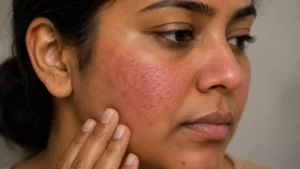
PRP skin treatment plays an important role in improving acne scars, especially when combined with microneedling. Growth factors released by PRP help remodel damaged tissue and encourage healthier skin regeneration.
Patients with:
- Atrophic acne scars
- Uneven skin texture
- Enlarged pores
We often see gradual improvement in skin smoothness and clarity with repeated sessions.
PRP Facial Before and After: What to Expect
When discussing PRP facial before and after, it is important to set realistic expectations.
Immediately After Treatment
- Mild redness or sensitivity
- Slight swelling in treated areas
- Skin may appear flushed
- Bruising is common if injected
These effects typically resolve within the week.
Short-Term Changes (1 to 2 weeks)
- Improved hydration
- Fresher appearance
- Subtle glow
Long-Term Results (4 to 12 weeks)
- Improved texture and firmness
- Reduced fine lines
- More even-toned skin
- Gradual scar softening
PRP facial results build over time as collagen production increases.
Who Is PRP Facial Best For?
A PRP facial is suitable for both men and women looking for medical skin rejuvenation.
It is commonly recommended for individuals with:
- Dull or tired-looking skin
- Early signs of aging
- Acne scars or textural irregularities
- Uneven skin tone
- Loss of skin firmness
Because it is customisable, PRP for face treatments can be adapted to different skin types and concerns.
How Many PRP Facial Sessions Are Needed?
The number of PRP facial sessions depends on the skin concern being treated.
- For general skin rejuvenation: 3-4 sessions
- For acne scars or texture correction: 4-6 sessions spaced a few weeks apart
Maintenance sessions may be advised to support long-term skin health.
Safety and Dermatologist Supervision
PRP facial and PRP facelift treatments are performed under medical supervision to ensure:
- Proper blood handling
- Correct PRP concentration
- Appropriate skin delivery techniques
This medical oversight makes PRP skin treatment a safe and effective option when performed correctly.
PRP Facial vs Regular Facials
While traditional facials focus on cleansing and surface exfoliation, a PRP facial:
- Works at a cellular level
- Stimulates collagen production
- Supports long-term skin repair
This makes PRP facial treatment a medical aesthetic procedure rather than a cosmetic spa facial.
Conclusion
A PRP facial is a dermatologist-led skin rejuvenation treatment that uses the body’s own regenerative ability. Whether used as a PRP facelift, a PRP skin treatment for acne scars, or a solution for dull and aging skin, platelet-rich plasma facial therapy supports healthier, stronger, and more resilient skin over time.
At Isya, PRP facials are performed under medical supervision by experienced doctors and medical aestheticians, led by Dr. Kiran, ensuring precision, safety, and consistency of results. Serving Delhi and nearby areas, Isya Aesthetics is trusted for evidence-based aesthetic treatments that prioritise natural outcomes and long-term skin health.
FAQs
What is a PRP facial used for?
A PRP facial is used to improve skin texture, tone, firmness, and overall quality by stimulating collagen production and tissue repair.
How does PRP facial work?
It works by delivering platelet-rich plasma into the skin, where growth factors activate natural healing and regeneration.
Is PRP facelift the same as fillers?
No. A PRP facelift does not add volume like fillers. It improves skin quality and firmness through collagen stimulation.
How long do PRP facial results last?
Results develop gradually and can last several months. Maintenance sessions help sustain improvements.
Is PRP facial safe?
When performed under dermatologist supervision, PRP facial treatment is considered safe with minimal risk.